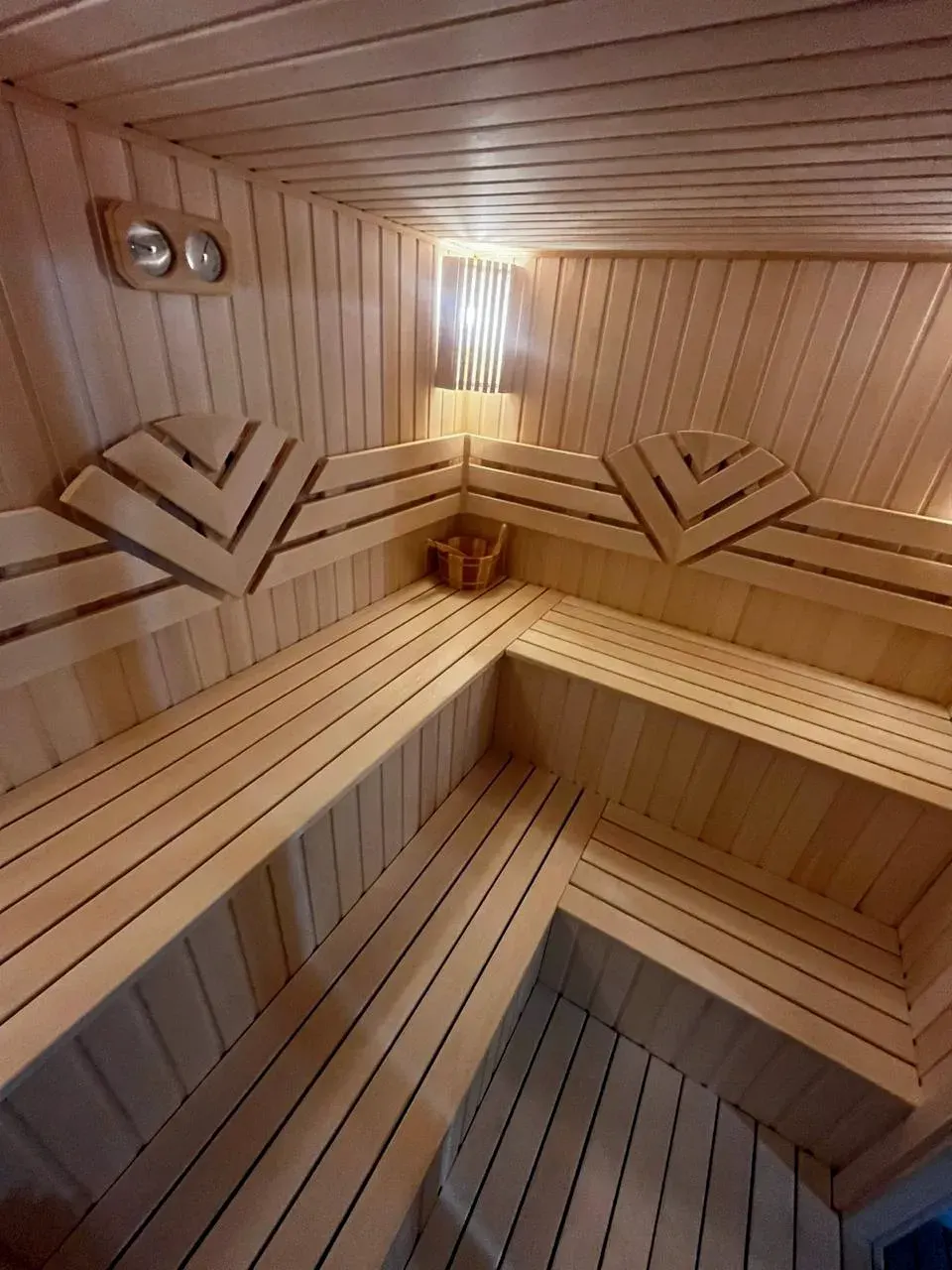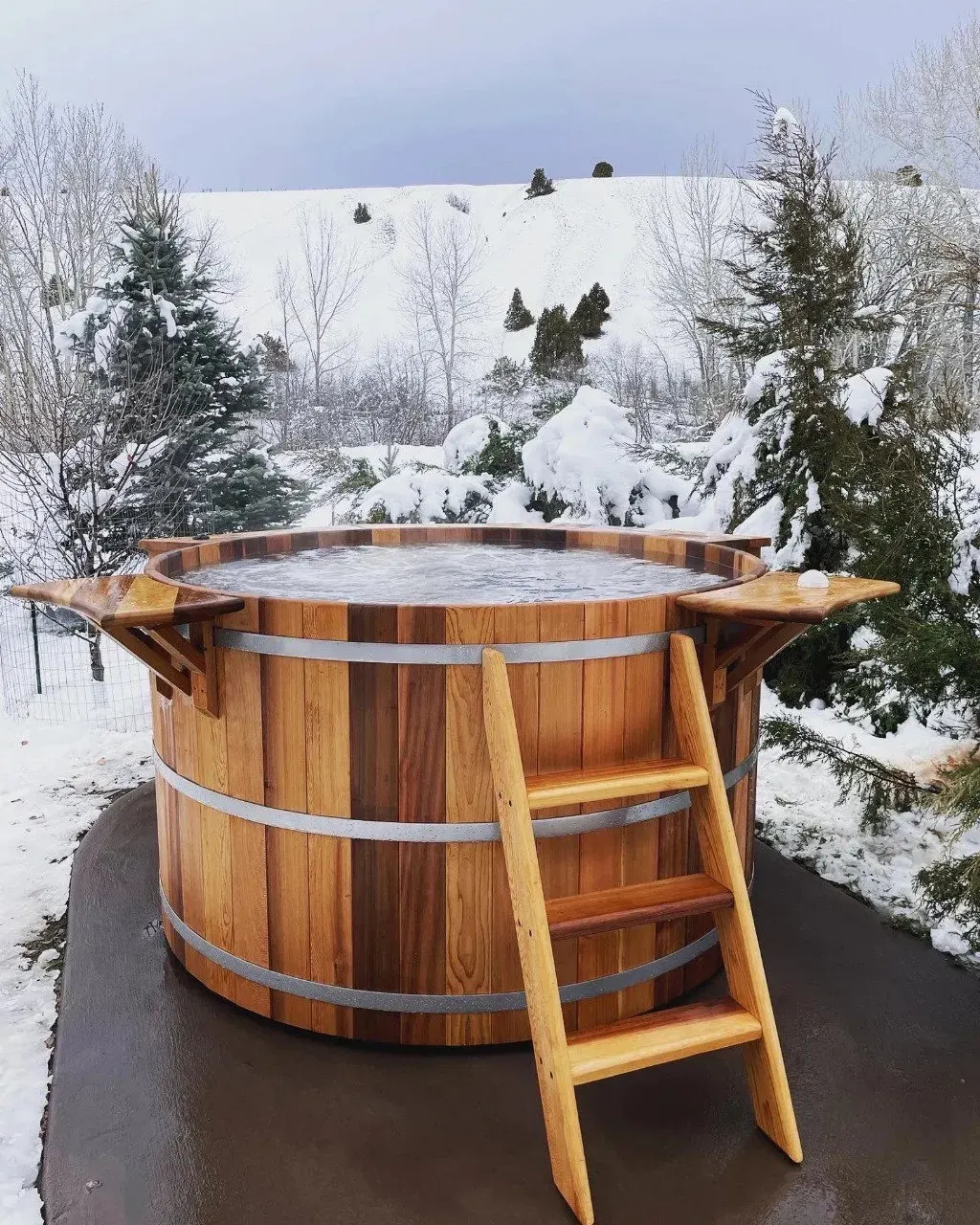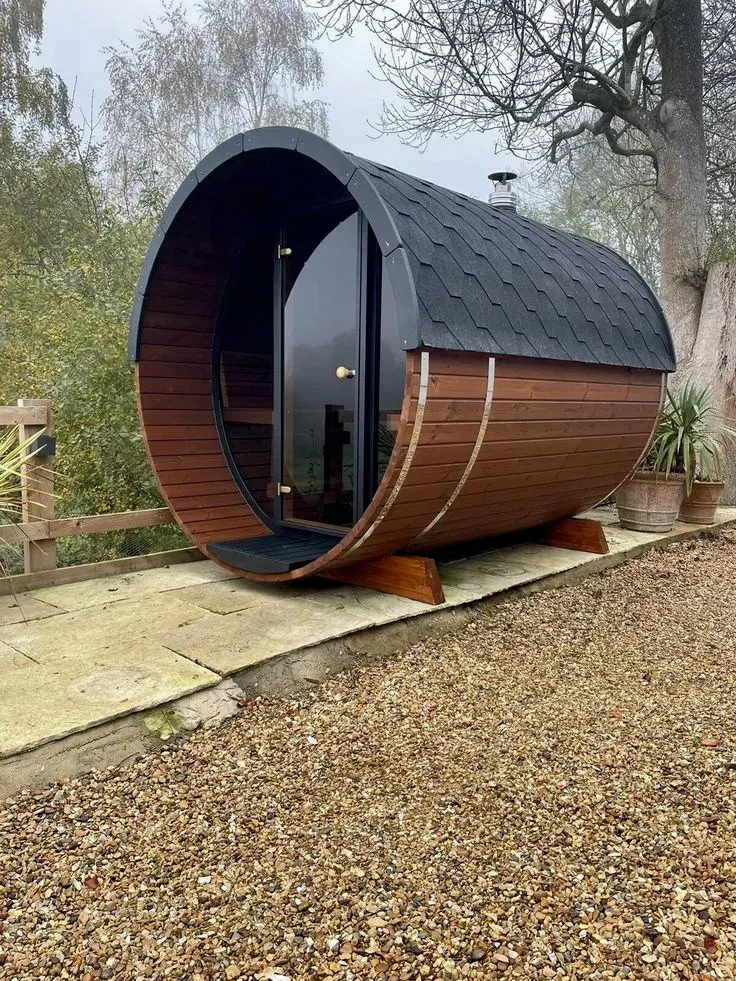
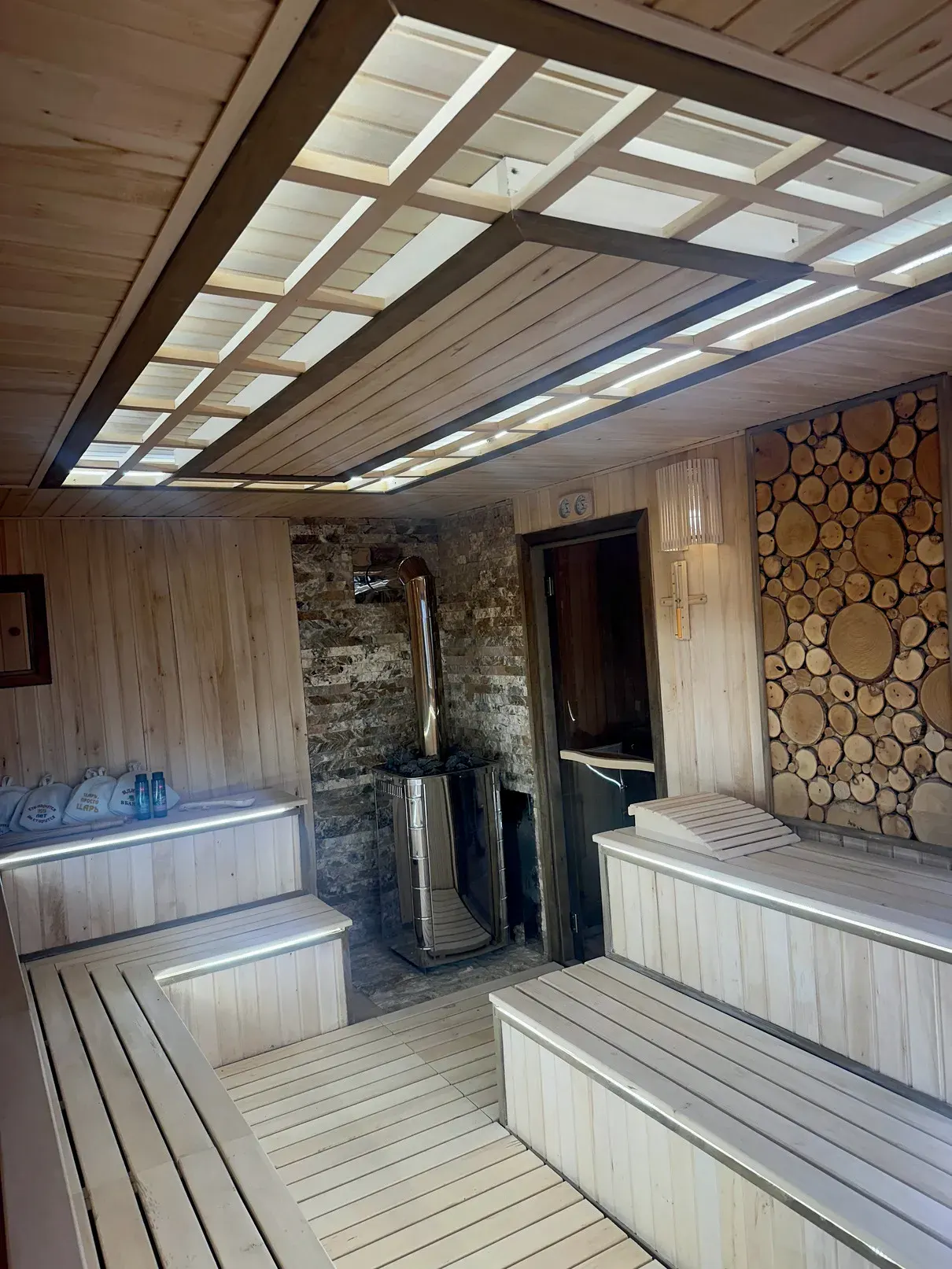
A wood burning sauna stove is the right choice if you want a real fire, soft steam and a sauna that doesn’t depend on the power grid. Size it by the volume of the hot room, run an insulated chimney through the roof and protect nearby walls and floor from heat. Below we walk through how to choose one, which specs matter and how to install it safely.
Why people choose a wood burning stove
Electric heaters are convenient, but for many people a sauna starts with crackling logs and the smell of wood smoke. The main advantages:
- No heavy electrical supply needed. In a mountain village, at a country house or anywhere the grid is weak, your sauna still gets hot.
- Fast heat-up. A correctly sized stove brings the room to bathing temperature quickly.
- Soft, full-bodied steam. A large stone mass gives gentler, more pleasant löyly when you throw water.
- Atmosphere. Flames behind a glass door turn the hot room into a place to unwind.
- Longevity. A stove made of thick steel or cast iron lasts for many years with proper use.
There are trade-offs: you need a chimney, firewood has to be stored and dried, and you control temperature with logs and the air damper rather than a button. That is why wood stoves are the natural fit for outdoor saunas — barrel, cube and cottage models.
Sizing the stove to the room
Wood stove spec sheets usually list a room volume range in m³ rather than a power rating. Here’s how to choose:
- Calculate the hot room volume: width × length × height. For example, 2.2 × 2 × 2.1 m ≈ 9.2 m³.
- Account for uninsulated surfaces. Every square metre of glass, stone or tile adds roughly 1.2 m³ to the effective volume. In a sauna with a panoramic glass front, the difference is significant.
- Leave headroom. Your volume should sit in the middle of the manufacturer’s range, not at the edge. The stove then runs calmly instead of being pushed hard.
| Hot room volume | What to look for |
|---|---|
| 5–8 m³ (small barrel or cube) | Compact body, small firebox, heat shields if placed near a wall |
| 8–14 m³ (mid-size sauna) | The widest choice, including glass doors and large stone capacity |
| 14–20 m³ and up | Powerful firebox, heavy stone load, often an extended feed tunnel |
An undersized stove takes forever to heat the room and has to be overfired, which wears the metal out sooner. An oversized one makes the air in a small room dry and harsh.
Firebox access: inside or from the next room
Wood stoves are installed in one of two ways:
- Fed from inside the hot room. Simple and compact — fine for small saunas.
- Through-wall feed (tunnel). The stove sits in the hot room, but you load wood from the other side of the wall — the changing room or outside. No ash or wood chips in the sauna, and combustion air is drawn from the adjacent space.
In a cottage sauna or any model with a separate lounge, a through-wall stove is very convenient. In a barrel sauna, where space is tight, the feed door usually stays inside.
Glass doors: looks and control
Most modern wood stoves have a door of heat-resistant ceramic glass. You see the flames and know when to add wood without opening the door. Some models have panoramic or curved glass and become the centrepiece of the room. Clean the glass only when the stove is cold, using a dedicated cleaner.
Chimney and fire safety
Safety with a wood stove comes down mostly to correct installation. The essentials:
- Insulated (twin-wall) chimney. Two stainless steel pipes with non-combustible insulation in between. Any section passing through the ceiling and roof must be this type.
- Roof penetration. Where the flue passes through the ceiling and roof, it is insulated with non-combustible materials and sealed against rain.
- Spark arrestor. A mesh cap keeps sparks off the roof and nearby trees.
- Heat shields. Wooden walls behind and beside the stove are protected with non-combustible boards or stainless steel shields. Minimum clearances are stated in the manufacturer’s manual — follow them.
- Floor protection. A non-combustible plate or tiles in front of the firebox door.
- Ventilation. Plan the air inlet and outlet from the start. Never close the flue damper while embers are still glowing.
Keep a fire extinguisher near the sauna and burn only dry wood — wet logs produce soot and smoke.
Sauna stones
Stones are the stove’s heat battery: they store heat and turn water into steam. Use stones made for saunas, such as peridotite, gabbro-diabase, jadeite or talc-chlorite. Worth knowing:
- Stack large and medium stones loosely so air can circulate.
- More stone mass means softer steam but a slightly longer heat-up.
- Once a season, take the stones out and replace any that are cracked or crumbling.
- Open stone compartments give sharper steam; enclosed stones or stones in a mesh cage give gentler steam.
Which brands to look at
Our sauna heaters catalogue includes wood burning stoves from Harvia, Teplodar, TMF and other makers:
- Harvia — Finnish brand: Legend (classic stone-tower look), M3, Linear, Pro, plus glass-door and through-wall versions.
- Teplodar — series such as Bylina, Hotrock and Kuzbas; some models hold stones in a mesh cage above the stove.
- TMF — Geyser, Sayany, Tunguska and other series, with cast-iron doors and panoramic glass options.
Each stove in the catalogue lists its suitable room volume (m³) and stone capacity, which makes it a good starting point. Barrel Sauna doesn’t just sell stoves — we install them complete with chimney, heat shields and stones.
Which saunas suit a wood stove
- Barrel sauna — the round profile reduces air volume, so even a compact wood stove heats it quickly.
- Cube and cabin saunas — if there’s a glass facade, always include it in your volume calculation.
- Cottage sauna — a large hot room plus a separate lounge is ideal for a through-wall stove.
FAQ
How long does a wood stove take to heat a sauna?
It depends on stove output, room volume, insulation and outdoor temperature. A correctly sized stove typically brings a well-insulated sauna to a comfortable temperature in about an hour.
What firewood is best?
Well-seasoned hardwood such as oak, hornbeam or birch. Softwoods produce a lot of resin and soot, so don’t use them as your main fuel.
How often should the chimney be cleaned?
With regular use, inspect and clean the chimney and the stove’s flue passages at least once a year. Dry wood greatly reduces soot build-up.
Can I put a wood stove in a sauna inside my house?
It’s technically possible, but chimney, fire-safety and ventilation requirements are demanding. For indoor saunas, an electric heater is usually the more practical choice.
Does a glass door reduce heat output?
No. Ceramic glass is rated for high temperatures and has practically no effect on stove output — it simply lets you see the fire.
Let’s choose the right stove for your sauna
Send us the size and shape of your sauna and what you want from it (live fire, soft steam, through-wall feed). We’ll match a stove to the volume and include the chimney and safety details in the project. Message us on WhatsApp for a free consultation and project.