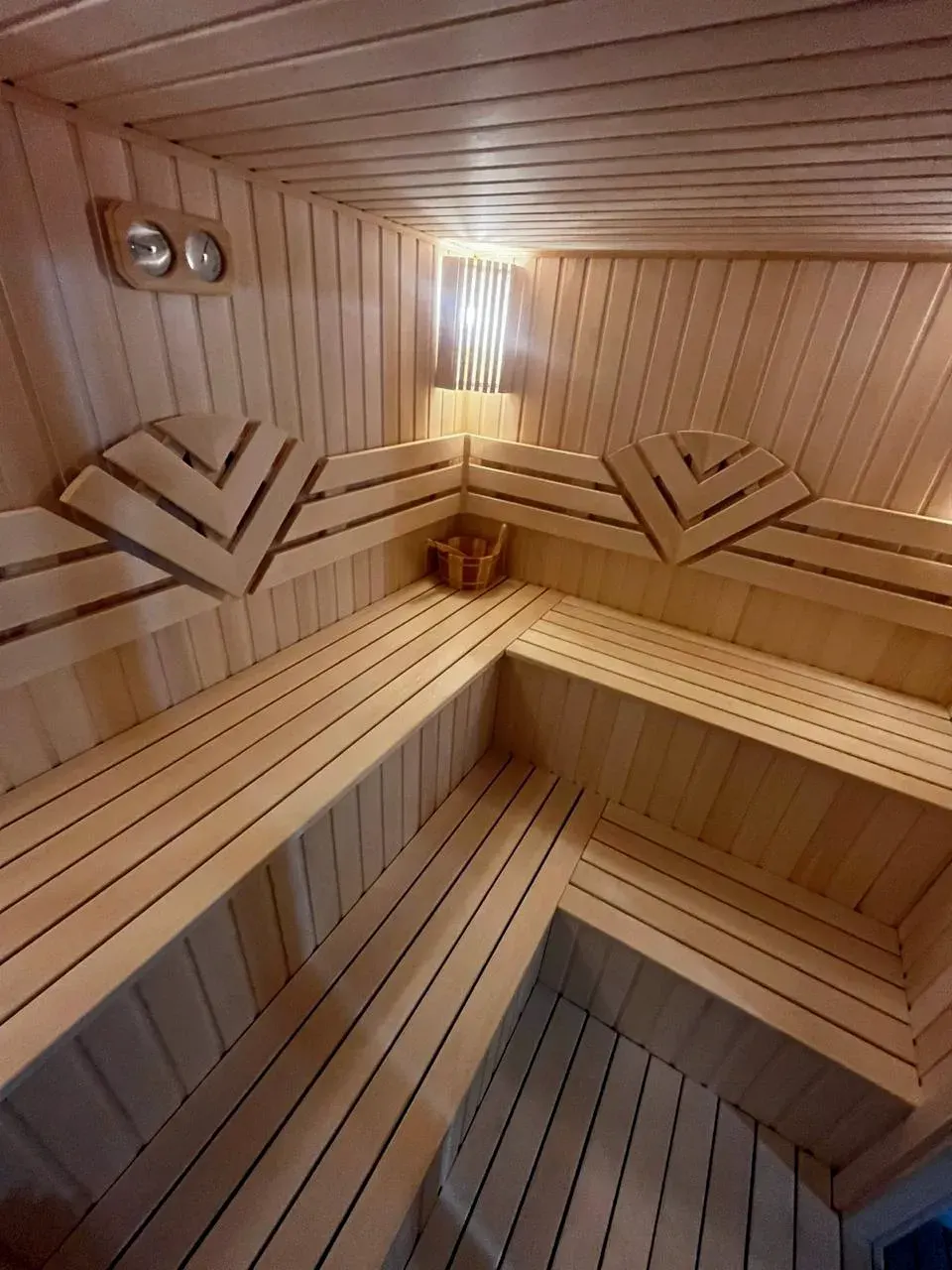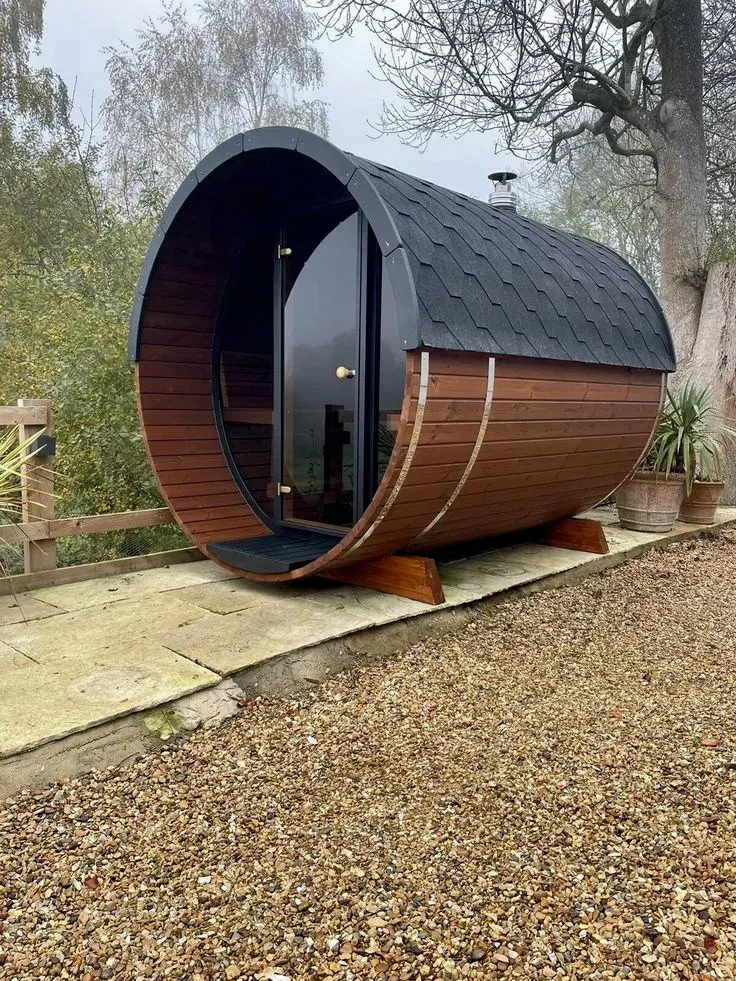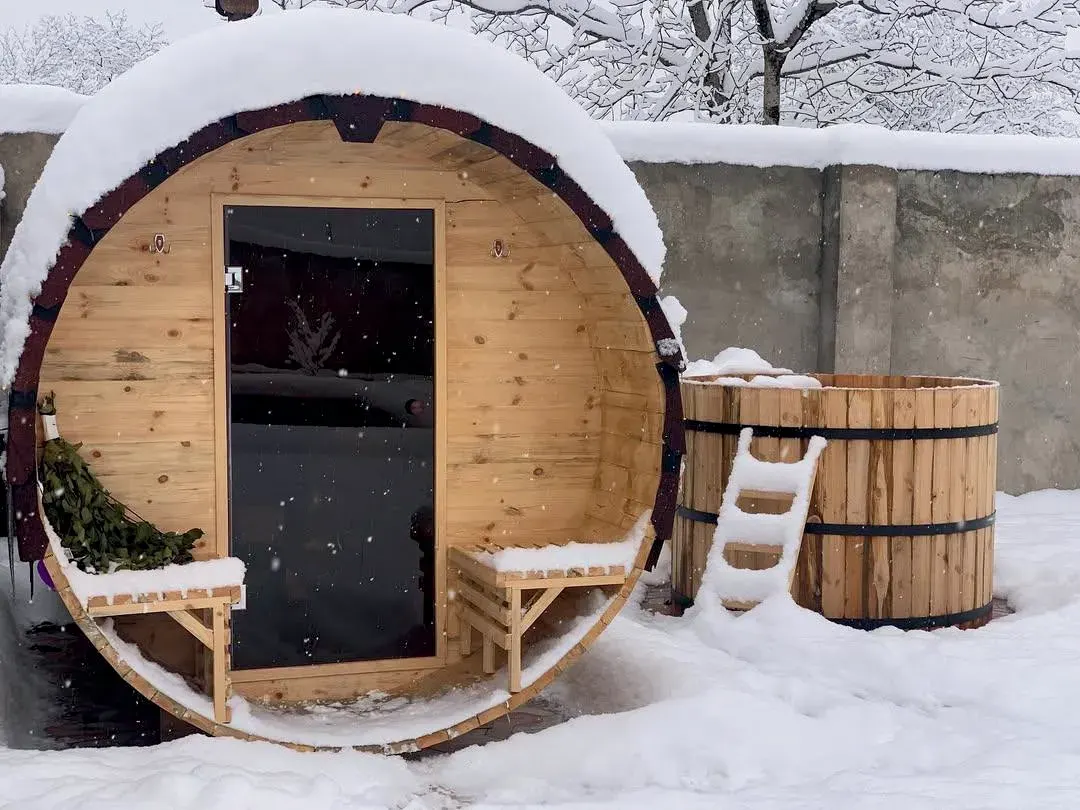
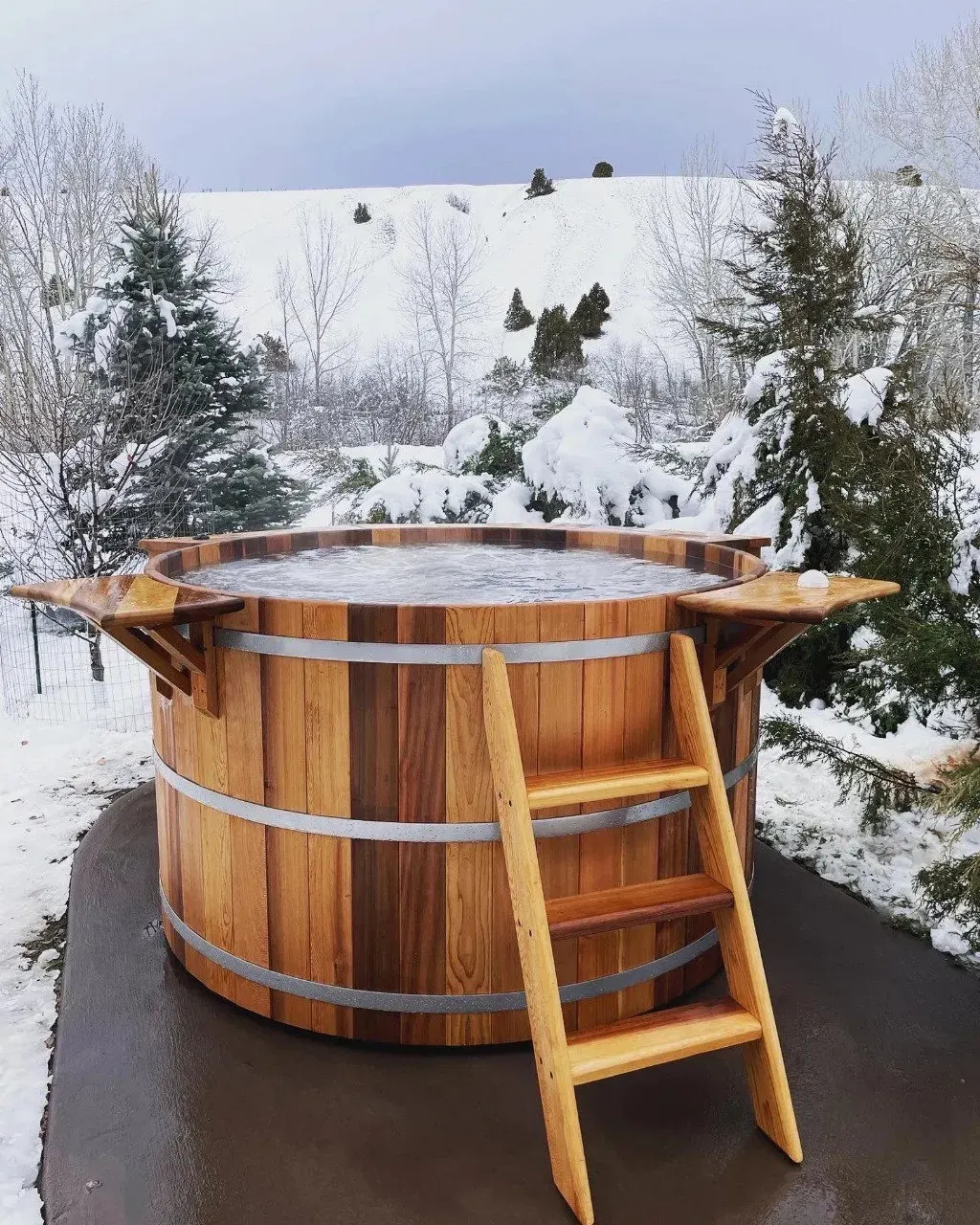
A cold plunge after the sauna cools your body down fast and completes the “heat — cold — rest” cycle. Many people come out feeling alert, refreshed and deeply relaxed. But cold water is a powerful stimulus, so it’s important to do it right — and to know who should skip it. Here’s what contrast therapy offers, how to practise it safely, and the options for a cold plunge at home.
What is contrast therapy?
Contrast therapy simply means alternating heat and cold. The sauna warms the body, blood vessels widen and you sweat. Cold water then cools you rapidly and the vessels narrow. Rest follows, and the cycle repeats. Finnish and Russian bathing traditions have done this for centuries with snow, ice holes or lakes; in a modern backyard, the cold plunge tub plays that role.
Cold plunge benefits
Research on cold water is ongoing, and effects vary from person to person. Still, these are the benefits people mention most:
- Fast cooling. After the sauna, body temperature settles faster than with a shower — especially on hot summer days.
- Alertness and freshness. Cold water “switches you on”, and many people feel a burst of energy.
- Muscle recovery. Athletes use cold water to reduce the feeling of soreness after training.
- Deep relaxation. In the rest phase after contrast, many report calm and better sleep.
- A complete ritual. Heat, cold and quiet together make the session feel whole.
Important: a cold plunge is not a medical treatment. If you have a specific health goal, discuss it with your doctor.
Who should avoid it
Sudden immersion in cold water triggers rapid breathing and a sharp rise in heart rate and blood pressure. Speak to a doctor first if any of these apply:
- heart or vascular disease, arrhythmia, a previous heart attack or stroke;
- high or uncontrolled blood pressure;
- pregnancy;
- Raynaud’s syndrome or strong sensitivity to cold;
- epilepsy or a tendency to dizziness;
- acute illness or fever.
Never use the sauna or the cold plunge after drinking alcohol.
Safe contrast therapy, step by step
- Sauna. 8–15 minutes, depending on how you feel.
- Short pause. Step out, catch your breath for a minute or two, rinse off the sweat.
- Ease in. Enter the cold tub slowly, feet first — don’t jump.
- Keep it short. Beginners need only 15–30 seconds. With experience, you can build up to 1–2 minutes.
- Calm breathing. Slow, deep breaths through the nose.
- Out and rest. Dry off, rest somewhere warm for 5–10 minutes, drink water.
- Repeat. Two or three cycles are usually enough.
Water temperature
| Level | Approx. temperature | Time |
|---|---|---|
| Beginner | 15–20 °C | 15–30 seconds |
| Intermediate | 10–15 °C | 30–90 seconds |
| Experienced | below 10 °C | 1–2 minutes, with care |
These are guidelines, not rules. If you start shivering hard, feel numb or weak, get out straight away. And never plunge alone — make sure someone is nearby.
Cold plunge options at home
A cold plunge tub
The most effective option is a dedicated tub right next to the sauna. Barrel Sauna integrates a cold plunge into the sauna project, and you can add a hot tub or jacuzzi alongside it. See all the options on our hot tubs & jacuzzi page.
An all-in-one container
If your yard is small, a container sauna + jacuzzi combines the sauna, a cold plunge and a lounge in one module.
A cool shower
The simplest place to start: a shower near the sauna. The effect is gentler than a plunge, which suits beginners.
A tipping bucket shower
A classic from Finnish and Russian bathhouses: a wall-mounted bucket that dumps cold water over you when you pull the cord. It takes little space and needs no complex plumbing. You’ll find tipping buckets and other sauna gear in our sauna accessories section.
Placing the sauna and the plunge
- Keep the cold tub a step or two from the sauna door.
- Make sure the path between them isn’t slippery, especially in winter.
- Plan water supply and drainage in advance.
- Add towel hooks and somewhere to sit — the rest phase matters too.
FAQ
When should I get into the cold plunge after the sauna?
After leaving the sauna, catch your breath for a minute or two, rinse off the sweat, then ease into the cold tub gradually.
How long should I stay in cold water?
Beginners: 15–30 seconds. With experience you can extend to 1–2 minutes, but always listen to your body.
Is a cold plunge suitable for everyone?
No. With heart or vascular disease, high blood pressure, pregnancy or other health concerns, consult your doctor first.
Is a shower enough instead of a plunge?
A cool shower is a good start, but the effect is milder. For strong contrast, a cold plunge or tipping bucket works better.
Can I order a cold plunge together with my sauna?
Yes. We design and install a cold plunge, hot tub or jacuzzi as one project with your sauna.
Let’s plan your sauna and cold plunge
Let’s pick the best contrast setup next to your sauna — a cold plunge, a hot tub or a tipping bucket. Send photos of your yard on WhatsApp for free advice, a design and an estimate.